Uneven Space
Anisotropy of Distance Perception in VR Architecture
Anisotropy of Distance Perception in VR Architecture
2025 Fall - Ongoing
Distance Perception, Virtual Reality Psychophysics, User Experiment
C#, Unity (VR), Oculus, R
Research @ UCLA Perceptual Processing and Computational Lab
Space and time are modes in which we think, not conditions in which we exist.
— Albert Einstein
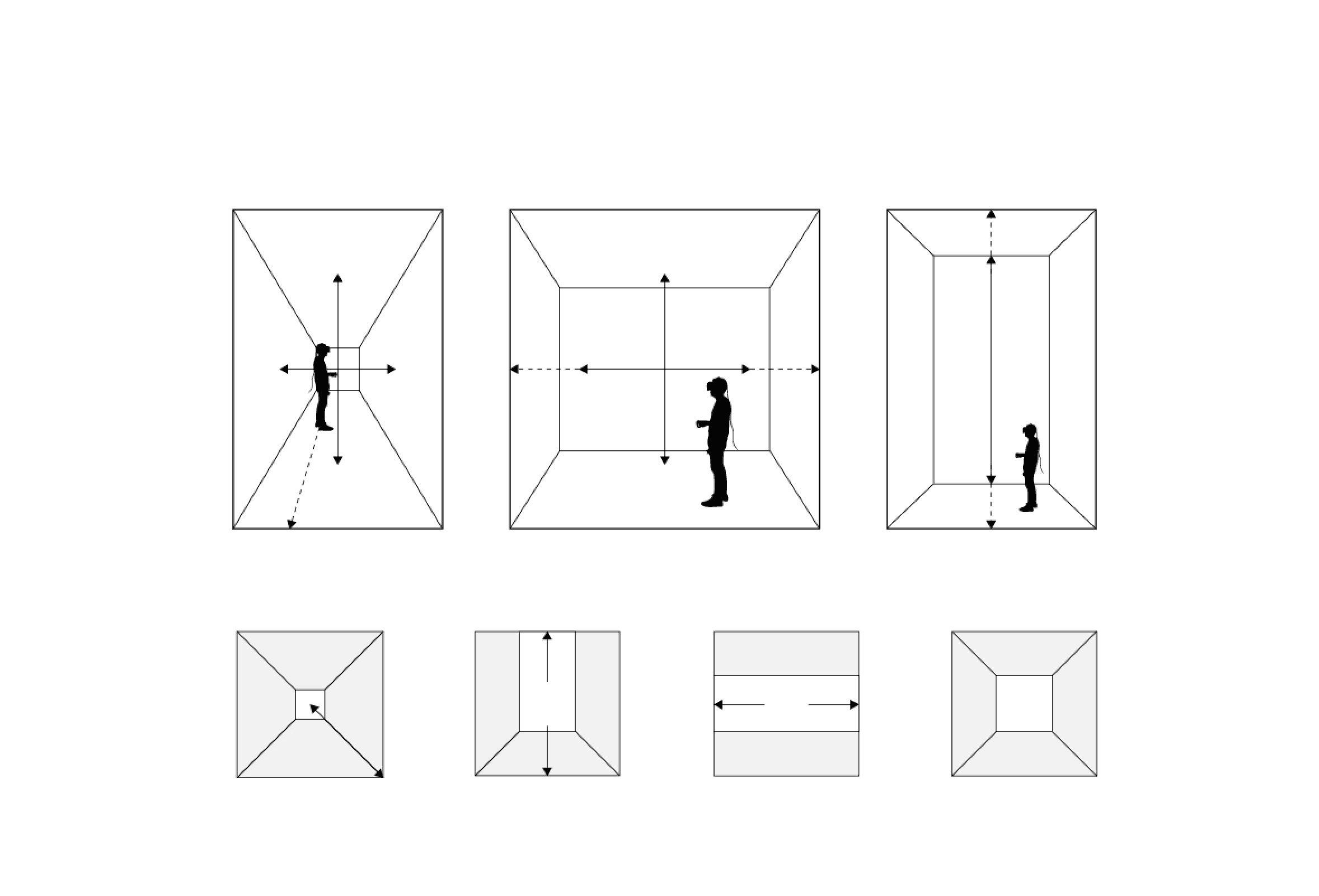
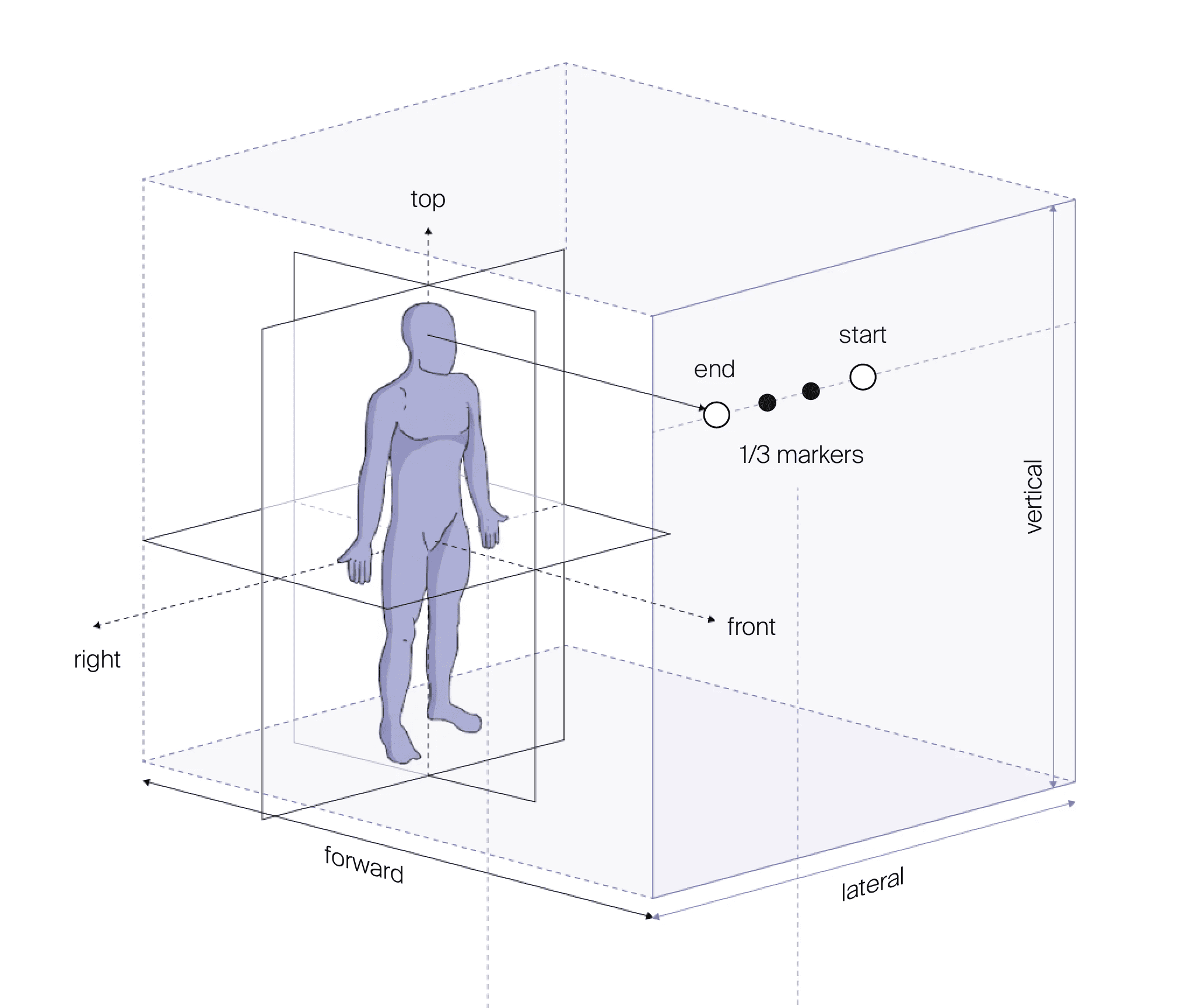
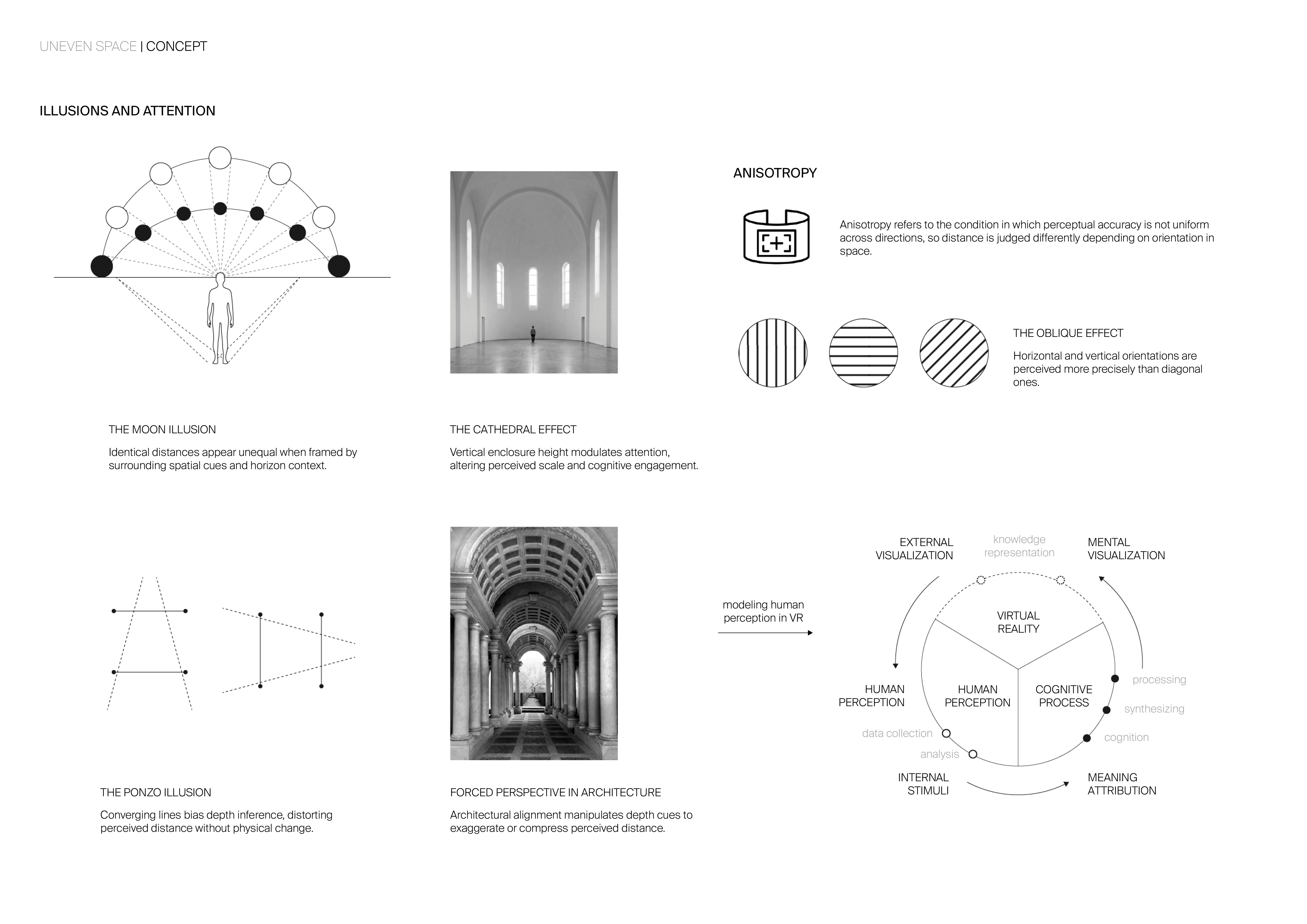
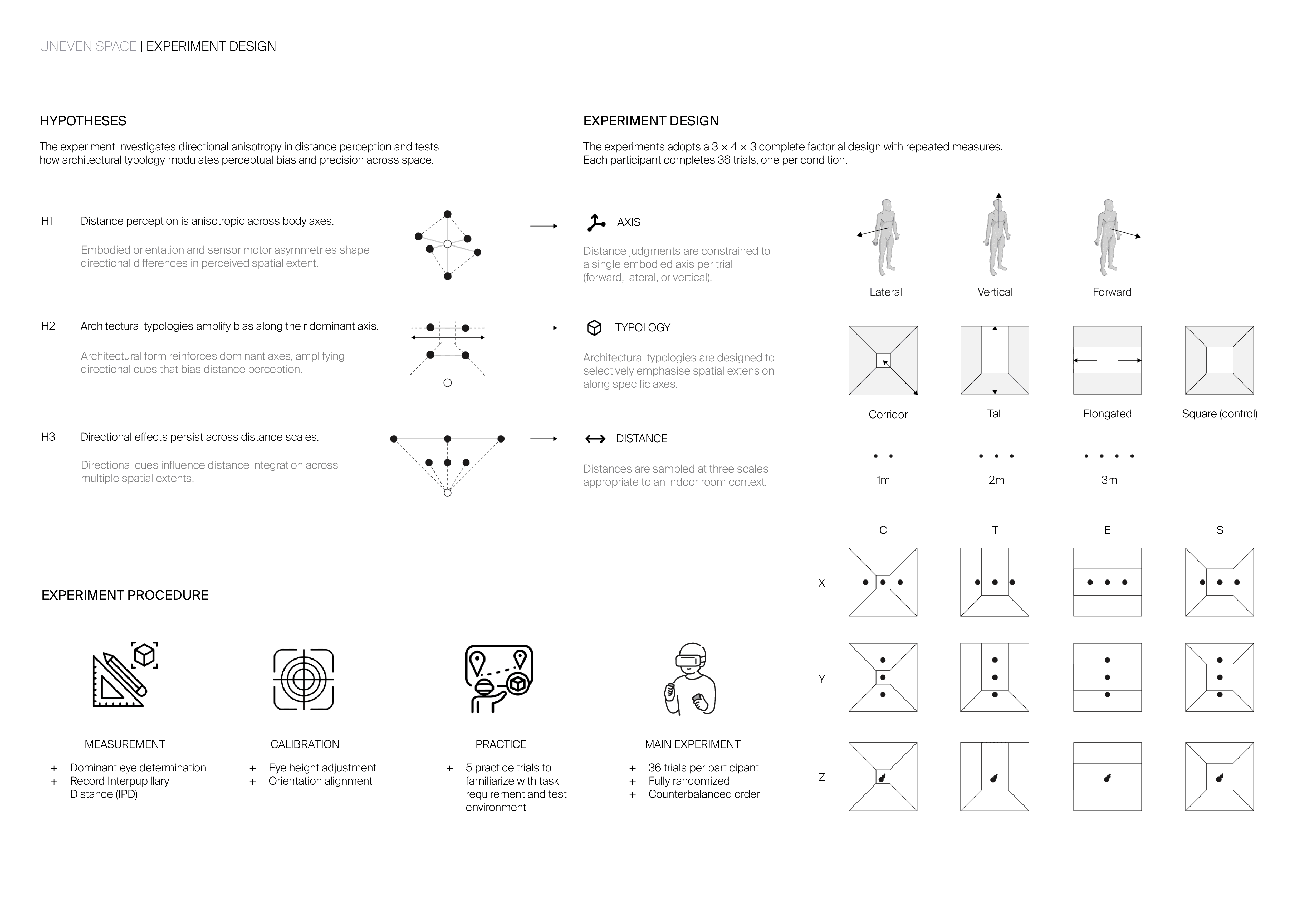
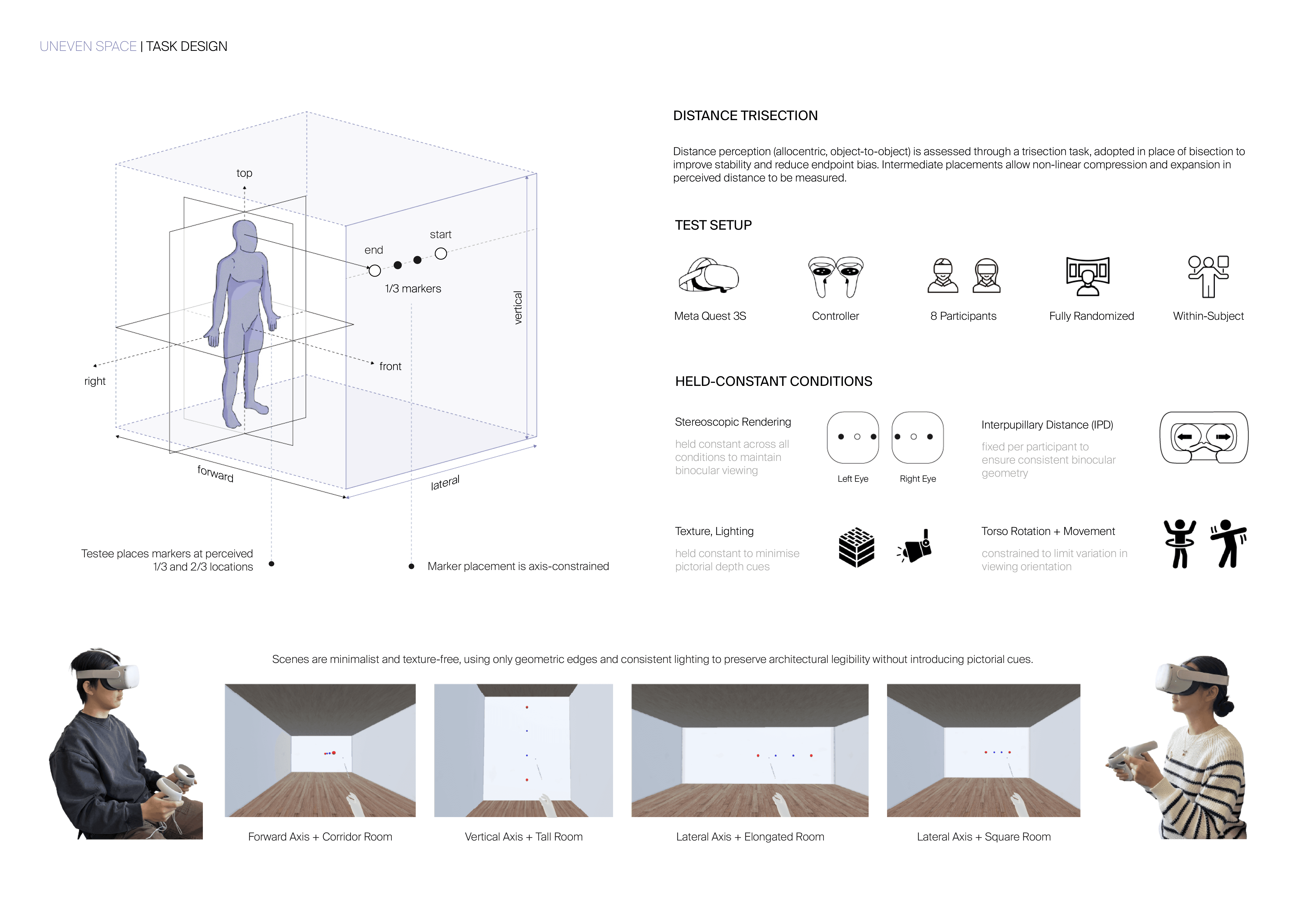
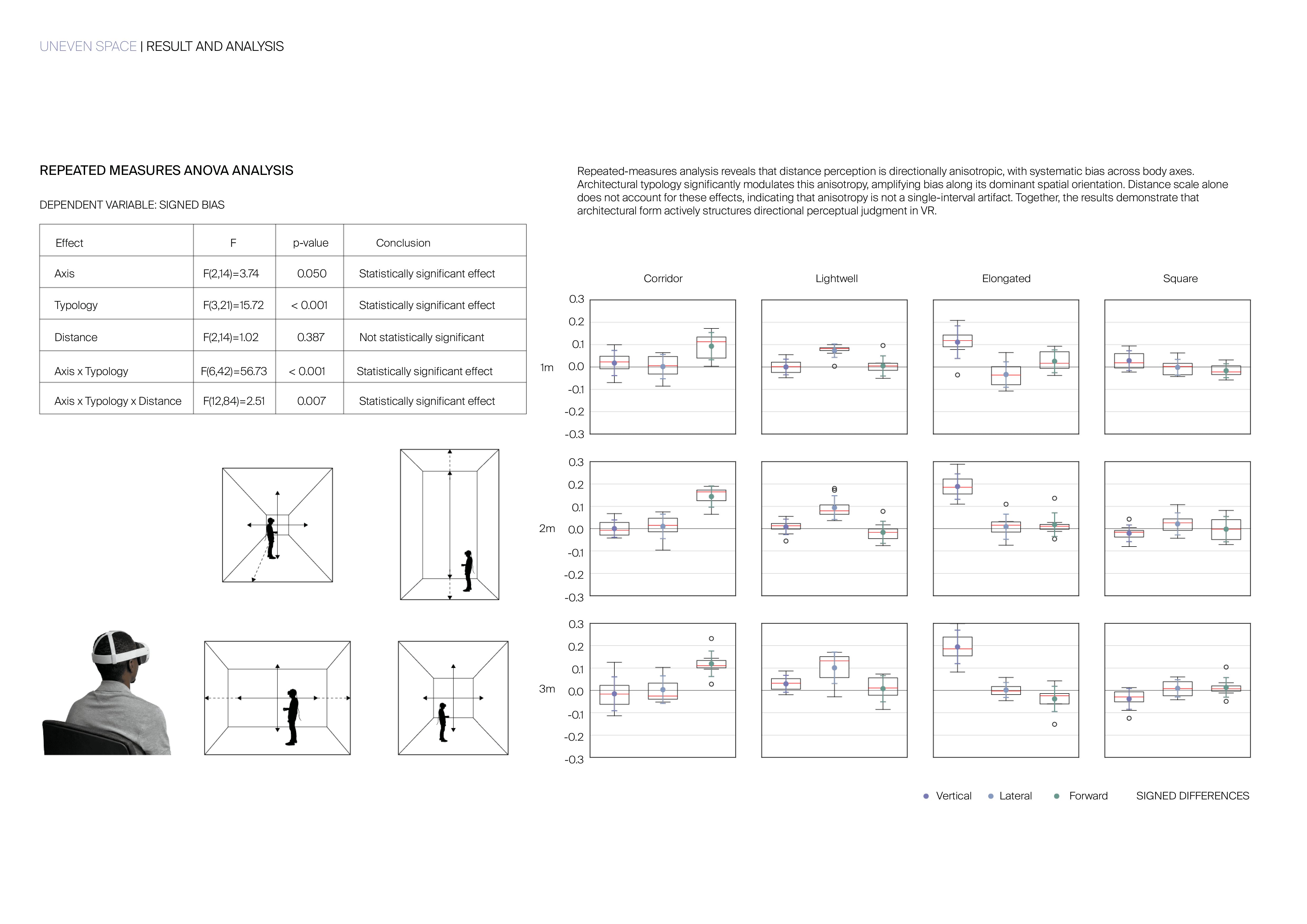
Uneven Space examines how architectural geometry influences human distance perception in virtual reality. Drawing on perceptual psychology, the project investigates anisotropy: the phenomenon in which spatial distances are perceived differently depending on orientation. A controlled VR experiment was developed in Unity where participants performed a distance-trisection task across three body axes (forward, lateral, vertical) and multiple architectural typologies. By systematically varying room proportions and measurement directions, the study isolates how spatial form biases perceptual judgment. Results show that distance perception is directionally uneven and amplified by architectural typology, suggesting that spatial geometry actively shapes how people experience and interpret space.
Anisotropy of Distance Perception in VR Architecture
2025 Fall - Ongoing
Distance Perception, Virtual Reality Psychophysics, User Experiment
C#, Unity (VR), Oculus, R
Research @ UCLA Perceptual Processing and Computational Lab
Space and time are modes in which we think, not conditions in which we exist.
— Albert Einstein
Uneven Space examines how architectural geometry influences human distance perception in virtual reality. Drawing on perceptual psychology, the project investigates anisotropy: the phenomenon in which spatial distances are perceived differently depending on orientation. A controlled VR experiment was developed in Unity where participants performed a distance-trisection task across three body axes (forward, lateral, vertical) and multiple architectural typologies. By systematically varying room proportions and measurement directions, the study isolates how spatial form biases perceptual judgment. Results show that distance perception is directionally uneven and amplified by architectural typology, suggesting that spatial geometry actively shapes how people experience and interpret space.
Anisotropy of Distance Perception in VR Architecture
2025 Fall - Ongoing
Distance Perception, Virtual Reality Psychophysics, User Experiment
C#, Unity (VR), Oculus, R
Research @ UCLA Perceptual Processing and Computational Lab
Space and time are modes in which we think, not conditions in which we exist.
— Albert Einstein
Uneven Space examines how architectural geometry influences human distance perception in virtual reality. Drawing on perceptual psychology, the project investigates anisotropy: the phenomenon in which spatial distances are perceived differently depending on orientation. A controlled VR experiment was developed in Unity where participants performed a distance-trisection task across three body axes (forward, lateral, vertical) and multiple architectural typologies. By systematically varying room proportions and measurement directions, the study isolates how spatial form biases perceptual judgment. Results show that distance perception is directionally uneven and amplified by architectural typology, suggesting that spatial geometry actively shapes how people experience and interpret space.